
Search Engine Optimization (SEO) is the process of enhancing a website’s visibility on Google and other search engines to rank well and consistently attract new paying legal clients. Effective search engine optimization transforms your website into the trusted go-to resource, helping people solve legal problems, answer questions, and find clear, factual information to make informed decisions about life’s legal challenges.

An Extraordinarily Different Mindset to Legal Marketing
People no longer want to be sold to—broadcasting sales messages and pitching your law firm is a thing of the past. Many law firms find inbound marketing challenging to grasp initially, but once they see it work, traditional methods quickly feel outdated. Outbound marketing pushes the firm’s message out, while inbound marketing (also known as search engine optimization) attracts clients by serving as an empathetic, helpful guide, offering valuable legal information right when clients need it, with no strings attached, and building trust from the very beginning.
Outbound Versus Inbound Examples
Outbound Marketing Example: A law firm might advertise divorce services on a billboard or in a digital ad, hoping to catch the eye of potential clients. This approach actively pushes the firm’s message outbound to a wide audience, aiming to create visibility and awareness.
Inbound Marketing Example: Conversely, when someone searches on Google for “how to get divorced in Georgia,” they might come across a detailed guide on a law firm’s website that addresses their questions. By providing valuable content, the firm allows potential clients to find answers on their own journey toward a solution, building trust and positioning itself as the most knowledgeable go-to resource. This way, when clients are ready to seek help, they are more likely to reach out to the firm that guided them.
Organic search engine optimization is achieved by empowering potential clients with knowledge about the law, educating them, and presenting strategies and solutions to resolve legal situations before they ever talk to your law firm. Unlike traditional advertising, SEO for lawyers is not about promoting your law firm. Instead, it focuses on helping online users and enriching their lives with helpful, practical, and resourceful information in a compelling and memorable manner. This can include comprehensive and definitive guides that break down complex legal information into layperson-friendly terms, as well as visual aids such as diagrams, infographics, and videos that simplify complex concepts into something easier to digest and understand.
Instead of relying on an advertising or marketing mindset to generate new clients, attorneys need to take on the role of educators or teachers, breaking down complex legal concepts and presenting them in a way that the general public can easily understand.
Why Google is Essential for Law Firm Marketing
Among all marketing platforms—TV, billboards, social media, and more—organic search engine optimization (SEO) on Google offers the highest volume of potential clients and the best return on investment for law firms, compared to everything else. When people need legal guidance or are actively seeking solutions, Google is their primary and most trusted resource. This provides your firm with a powerful opportunity to connect with clients at the exact moment they’re searching for solutions or answers to their legal challenges. By establishing a strong presence on Google, your firm can position itself as a trusted authority and reliable source of support, reaching clients precisely when they need help and solidifying your reputation as the go-to resource online.
Organic Search Engine Optimization Versus Pay-Per-Click Ads
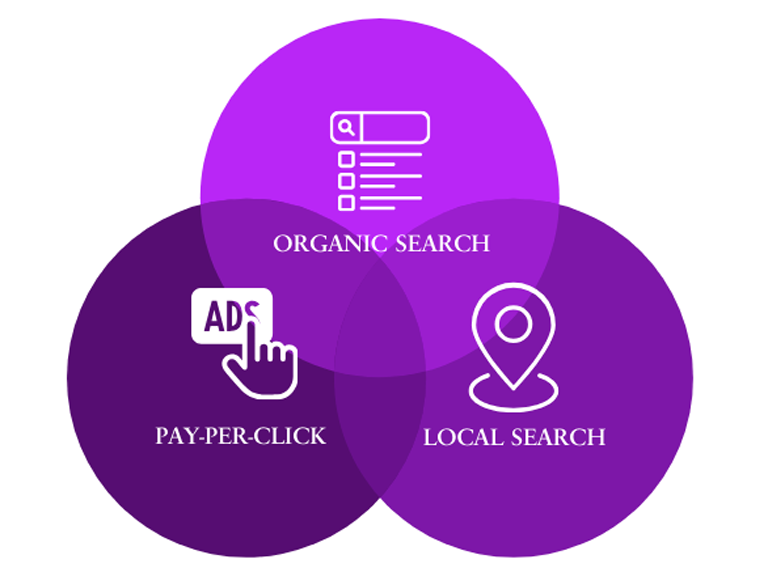
Search engines usually have two main sections. For example, Google’s search results page has two main parts that are important for law firms: organic search results and pay-per-click ads.
The organic search results are the main listings that appear because Google considers them the most relevant answers. Law firms earn their place in these organic results by providing strong, helpful, and resourceful information that helps the average person understand legal topics. By creating valuable content that truly meets people’s needs, law firms can earn clients who trust and appreciate the information provided, rather than relying on paid placements. About 90% of people looking for legal information on search engine click on these results, making this area essential for reaching new clients.
Above the organic search results are pay-per-click ads, which are paid listings. Law firms can pay to appear in this section by bidding on keywords and paying each time someone clicks on their ad. However, these ads capture only about 10% of clicks on search engine, as most people prefer and trust organic results when searching for legal information. Pay-per-click ads are a primary revenue source for search engines like Google. They can be highly effective for newer law firms seeking immediate traffic, especially if they don’t yet have comprehensive, high-quality content. However, pay-per-click can become costly over time, and once you stop paying for ads, your website will no longer appear in those paid search results on the search engines.
Earning New Clients with Search Engine Optimization
To succeed in SEO, your firm needs to establish itself as a trusted online publisher by consistently producing high-quality, informative content that not only surpasses what other firms offer, but also provides more answers, deeper insights, and engaging visuals. This approach positions your firm as the go-to legal resource in your state and area of practice, gradually building trust and authority.
In the past, you could buy your audience, but today, the tables have turned. The only way to succeed is to earn new clients by being an empathetic guide, helping them navigate their legal challenges and, ultimately, allowing them to see your law firm as the solution to their problem.
Your website should be an authoritative resource that is easy for anyone to understand and grasp, offering comprehensive, well-structured information that addresses client’s needs and concerns more effectively than any competitor.

The Container (Your Website) and the Content (Your Information)
Imagine a beautifully wrapped gift. The packaging is elegant and eye-catching, making you eager to open it. But when you do, it’s the gift inside that matters most—it’s what holds the real value and meaning. In the same way, a law firm’s website has both a “container” and “content,” each with its own role in the overall experience.
When considering search engine optimization (SEO) to grow your law firm’s revenue, it’s important to understand the difference between the container and the content of your website.
- The Container: Think of the container as the structure of your website—it includes the design, layout, logo, photos, and videos that give visitors a sense of your firm’s professionalism and brand. A well-designed container presents a polished, trustworthy image that leaves a positive impression on potential clients. It’s like the packaging: people notice it, and it can enhance the experience of your brand.
- The Content: The content (the value driven information), on the other hand, is the actual information on your website—such as articles, blog posts, FAQs, and practice area descriptions. This is where the real value lies. Well-written, informative, and relevant content helps potential clients understand their legal issues, builds trust in your expertise, and answers their questions. It’s the content that truly engages visitors and encourages them to reach out to you for help. In SEO, valuable content is what helps you rank higher on Google, bringing in more visitors who are searching for legal information.
In essence, while the container—your website’s design and layout—is important for making a good first impression, it’s the value-driven content and information within that ultimately converts potential clients into paying clients and future referrals.
The 2 Types of Websites – A Brochure Website and a Comprehensive Go-to Legal Resource
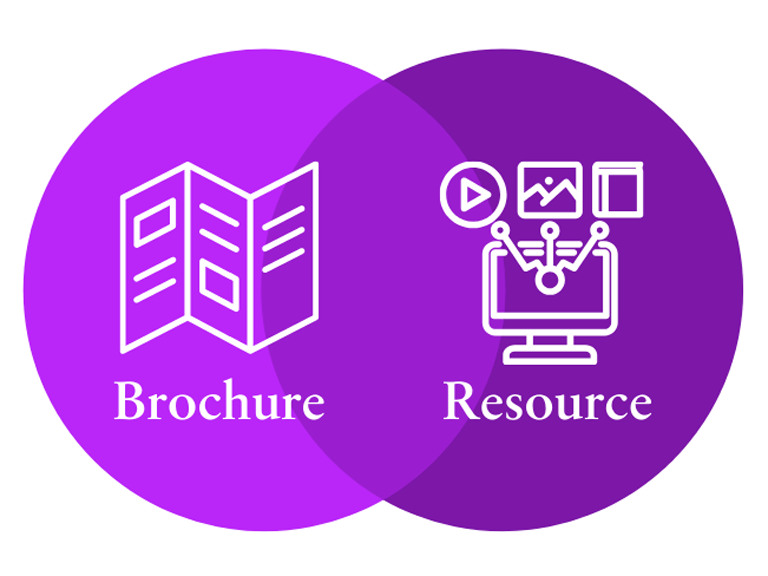
Law firm websites generally fall into two categories: the brochure website and the comprehensive go-to legal resource. A brochure website typically provides a summary of the law firm’s services, credentials, and attorney biographies. Its purpose is to introduce the firm and establish its credibility. While this type of website is informative, it often lacks the depth that clients seeking answers to complex legal questions may need.
In contrast, a comprehensive go-to legal resource does everything a brochure website does—and much more. It serves as an educational hub for people looking for reliable, easy-to-understand information on specific legal topics. Instead of merely highlighting the firm’s services, a resource-based website dives deeply into the law, breaking down complex subjects in a way that laypeople can grasp. This includes covering a wide range of topics, answering frequently asked questions, and providing thorough, accurate information, potential legal strategies and defenses, and insight to help people solve their legal problems. This is no different than having a full-time lawyer on your website empowering and educating the public about the law 24 hours a day at no cost.
Building a resource like this helps establish trust with potential clients who want to hire a law firm. It also makes your law firm a credible authority in the eyes of Google, pushing your website to the top of the search results. Your potential clients turn to Google to help them navigate life’s legal challenges. By positioning your law firm as a reliable, helpful guide, you can support users in achieving their desired legal outcomes and making informed decisions—an approach that consistently brings in new business. In fact, the most successful law firms in the country offer the largest, most comprehensive online legal resources usually with hundreds of webpages.
By creating a legal resource that is valuable, informative, and credible, your site becomes a go-to destination for potential clients. This not only boosts your search rankings but also encourages users to share, link to, and cite your website, further increasing its reach and credibility online.
Technical Search Engine Optimization Explained
With the “container” concept in mind—and recognizing that your law firm needs to create a resource, not just a brochure—let’s now explore technical search engine optimization.
When you step into a well-designed space, everything feels right. There’s a sense of flow, an ease of movement, and an unspoken clarity about where to go and what’s available. You might not notice the intricate details that make it work—the carefully chosen layout, the subtle lighting, the strategic placement of signs—but these elements all guide you intuitively, shaping your experience without calling attention to themselves.
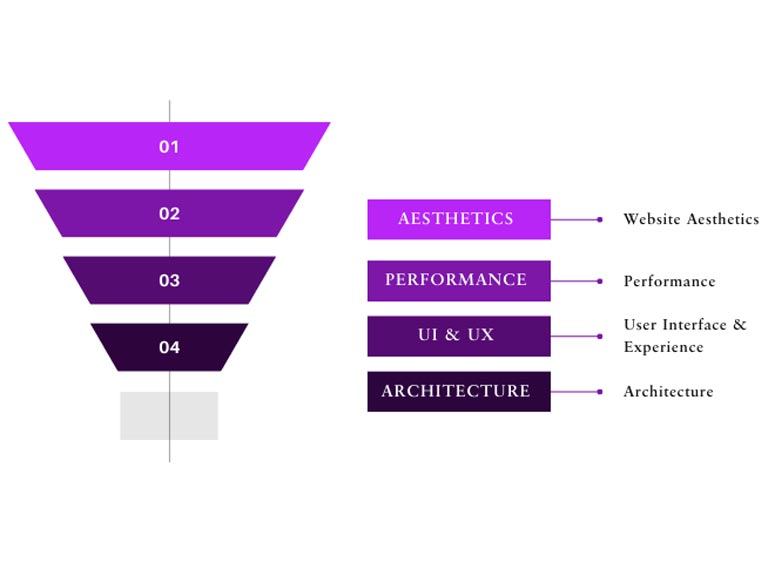
Technical search engine optimization (SEO) is that invisible hand guiding the experience on a website. It’s not about what you see, but how effortlessly everything falls into place: the quick load time, the intuitive structure, and the clear sense of purpose in each part of the site. Behind the scenes, titles, descriptions, and optimized images work quietly, making sure that search engines understand the purpose of each page, just like subtle cues in a well-designed space help visitors find their way.
Through these subtle adjustments, your website becomes more than a collection of pages—it becomes a place where visitors feel guided, engaged, and understood.
How Google Scores Websites – Authoritative Content and Authoritative Inbound Links
Google is thorough when it comes to ranking websites. Its scoring system focuses on two main factors: the quality of your content and the quality of inbound links. Google considers links to a website as a “vote of confidence” or a recommendation. Each link acts as an endorsement, signaling to Google that the linked content is valuable, credible, and worth ranking higher in search results. Google believes that if your content is truly valuable, other websites and social media platforms will share it, link to it, and cite it.
For example, let’s say you have a criminal defense law firm that creates a definitive guide on the Miranda warning—a legal requirement that informs individuals in police custody of their rights to remain silent and have an attorney, protecting them from self-incrimination during questioning. If major media outlets like The New York Times and The Washington Post start citing and linking to it in new stories, Google will recognize this as a sign of high-quality content and reward your site with a better ranking.
To attract high-quality, authoritative links like these, you must create impeccable content from the start. It’s always about quality over quantity, but maintaining a steady flow of high-quality content also matters to stay competitive. Over time, as you continue to publish valuable content, more high-quality links will naturally build up, further improving your site’s overall ranking.
Google prioritizes 100% original, unique, and high-quality content that provides depth, breadth, and substantial value to users. Its algorithms are designed to rank content based not only on relevance but also on the exceptional benefits it offers. This means content creators should strive to produce thoroughly researched content that stands out by offering insights, detailed explanations, and perspectives beyond what’s currently available at the top of Google’s search results. The goal is to surpass competitors by creating content that truly educates, engages, and empowers users about the law.
Developing content at this level requires extensive research, meticulous fact-checking, thoughtful writing, and the inclusion of visuals that make complex information accessible to a general audience. Surface-level content that merely regurgitates what’s already been published or lacks meaningful insight is unlikely to earn Google’s favor. In fact, Google actively seeks out content that provides new insights, adds immense value, and goes beyond basic, surface-level information, offering users a comprehensive understanding of the topic.
To meet these standards, high-quality content should introduce unique perspectives, detailed analysis, or comprehensive information that’s hard to find elsewhere online. The goal is to make your content at least 10 times better than what currently appears on Google for the same topic. Creating and publishing content should be seen as worthwhile only if it is exceptional. This level of content creation requires a significant investment of time, effort, and hard work.
Genuinely unique content tells stories or presents information that hasn’t been shared before, helping users see common concepts in a new light. The most valuable content doesn’t just exist as a standalone piece but also offers practical benefits, tools, and resources that solve real problems or provide tangible insights for the audience.
Local Search Engine Optimization
In addition to regular search results and pay-per-click ads, there’s a special way to help your law firm show up locally: Google Maps and a Google Business Profile. A Google Business Profile lets you control how your firm appears on Google Maps and in local search results, making it easy for people nearby to find you. To start, you create and verify your profile with Google to confirm your location. Once it’s set up, you can add your contact info, office hours, photos, and client reviews to make it more appealing and trustworthy for local clients.
Think of search results as having multiple layers, much like a cake. The foundation—or the cake itself—is your website, packed with high-quality content that educates potential clients on legal issues and builds trust. Once this solid base is in place, adding a Google Business Profile and enhancing your visibility on Google Maps serves as the frosting—providing an extra layer of credibility and authority. Together, these layers create a cohesive strategy: your website attracts visitors nationwide and within your state, while your Google Business Profile and Maps listings ensure local clients can easily find your law firm.
Ranking well in organic search results requires impactful, high-quality content. To achieve strong rankings in both organic search results and Google Maps, however, credibility and authority are essential. Being recognized as a trusted, go-to legal resource often means other reputable third-party websites confirm that your business name, address, phone number, and URL are consistent across the internet.
This consistency acts as Google’s way of verifying that your business is legitimate and trustworthy. To rank well in Google Maps and local search results, your law firm’s information must be accurate and uniform everywhere online. These consistent mentions, known as local citations, enhance your local rankings, making it easier for potential clients in your area to find you on Google Maps and in local search results.
The organic search results influence Google Maps and vice versa. This means that if both are optimized and authoritative, they work hand-in-hand to keep your website ranking well and attracting new paying clients.
The Importance of Research, Strategy, and Competitive Analysis
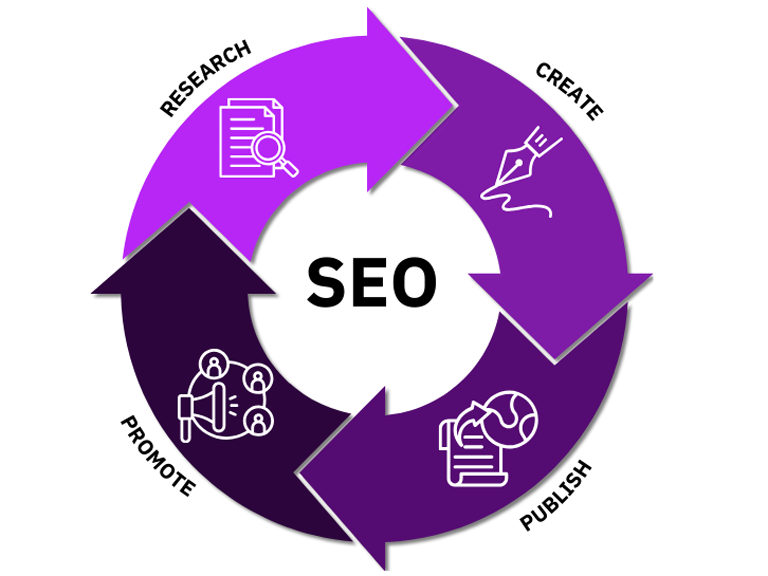
A well-rounded SEO strategy for law firms goes beyond basic content creation; it requires thorough research, strategic planning, and competitive analysis. For a law firm to succeed in SEO, it’s essential to understand how potential clients use search engines like Google, what they’re searching for, and which specific topics will help your firm rank well. Too often, lawyers create content based on what they think matters, essentially throwing spaghetti against the wall without realizing that clients may be searching for information from a different angle or with different priorities.
Instead of guessing, law firms should leverage content research tools to ensure they’re addressing the exact legal topics that clients are actively searching for. Additionally, analyzing competitors’ content strategies is critical. To rank higher and outperform competitors, your content must offer more value—meaning it should be more informative, relevant, and comprehensive. This approach not only strengthens your firm’s competitive position but also helps attract more clients by delivering high-quality, targeted content that meets their needs.
FAQs
How Long Does Organic SEO Take for Law Firms?
It depends on your location, your competition, and the amount of work involved to achieve your goals and objectives.
Organic SEO is a long-term investment, and for new law firm websites, you can generally expect it to take many months to start gaining traction in competitive areas of law.
Just like in the real world, where a law firm needs time to build its reputation and earn trust, the same principle applies to search engines. A brand-new law firm, or one that has only recently begun focusing on SEO, will not instantly gain Google’s trust. Even if you publish exceptional content tomorrow, it may still take many months to see meaningful results.
This process is similar to a holding pattern for airplanes on a runway. If you consistently produce high-quality, valuable content, your “plane” will eventually be cleared for takeoff. The quality of your information, combined with inbound links, which act as “votes” of credibility for your content, can help improve your rankings over time.
Google looks at the quality of your content, the quality of the inbound links pointing to your website, and many other signals to determine the overall value and authority of your site. The idea is that if your content has real merit, people will naturally share it online and across social media platforms.
What’s More Important: Content or Technical Aspects of a Website?
When investing in organic search engine optimization, it’s essential not to become overly focused on just one area. Some law firms place too much emphasis on the technical aspects of their website, believing that alone will improve their rankings. While having a polished, professional website is important, true SEO success starts with high-quality content and a strong content strategy.
Google places significant emphasis on content when determining search rankings. In our experience, content accounts for a substantial portion of Google’s ranking considerations and often outweighs technical performance alone. This is important to understand because, for a law firm to succeed on Google, it must consistently produce valuable, relevant content that addresses the needs and concerns of potential clients.
Content is the foundation of SEO. It helps establish your firm as a trusted resource, builds authority over time, and encourages potential clients to return to your website when they need answers or legal guidance.
How Much Does SEO Cost?
The cost of SEO varies depending on several factors, including the time and effort required and the competitiveness of your legal market. For instance, a law firm in a rural Georgia town would likely face less competition than one in Los Angeles, meaning their monthly SEO fees could differ significantly.
An initial fee is typically required to redesign or restructure a website, establishing a solid foundation for SEO.
A monthly retainer fee is also quoted for ongoing search engine optimization services. This monthly work involves extensive research and analysis, content creation, editing, and detailed reporting.
What Should I Look for in an SEO Company That Promotes Law Firms?
When selecting an SEO company to promote your law firm, focus on the quality of content they’ve produced for other clients. Ask for examples of inbound links they’ve earned through their work, as an established SEO firm will have a portfolio showcasing high-authority links. These links should come from reputable sources, such as media outlets, news organizations, and other trusted websites, highlighting the value and credibility of the firm’s content and efforts.
Another key factor is the firm’s client history. Look at who they’ve worked with and for how long. Authoritative SEO companies tend to have clients who stay with them for years, a testament to the high return on investment these firms achieve for their clients.
To learn more about search engine optimization services for your law firm, please submit your contact information below to schedule a discovery call and a comprehensive audit of your law firm’s website.
A Simple Process to Getting Started

Schedule a Discovery Call
Schedule a no obligation, discovery consultation on Zoom or in-person.

Receive a Custom Proposal & Strategy
Receive a custom proposal and strategy based on your unique needs.

Start Growing
Start growing your brand online.